

Work Details
Theta
2024
Ink, natural dyes on barkcloth
47 X 39 inches Framed
Inventory ID: # 17202
The idea of a universal network of consciousness is a concept often explored in philosophy and spirituality. There is no scientific evidence to definitively prove or disprove such a network, and it's important to remember that the concept of a universal consciousness network remains theoretical. However, this intersection of art, science, and spirituality in Crites' work encourages further exploration and contemplation of these mysteries and our place in the universe.
About Gayle Crites
Bark comprises some of the world’s oldest cloth, and is still hand-pounded by indigenous women in locations ranging from the south Pacific through the Americas to Africa. I use varieties of this cultural art form from Tonga, American Samoa and Nicaragua as the “canvas” for my works in this show. Historic natural dyes of indigo blue from India and cochineal red from Mexico contribute more natural elements to these works, which connect ancient humankind to the burgeoning population of our modern world. Just as men have always relied upon trees for materials and oxygen, another connection between the ancients and modern society is our dependence upon, and challenges with, water. My most recent body of work reflects a theme of water and the concepts of flow, aquifer, drought, pollution and the tangled problems we face in using and preserving humanity’s lifeblood.
Gayle Crites was born in 1949, Denver, Colorado. She earned a BA/Fine Art Printmaking from Colorado State University in 1971 and continued studies at the University of Mexico, Guadalajara. She has traveled to various countries to study the use of natural dyes, focusing her time with Zapotec weavers and dyers in the Oaxaca region of Mexico. She acquired barkcloth from Tonga, Samoa, Hawaii, Nicaragua, Africa and Peru, also through her travels and connections with individuals living abroad. Her work is featured nationally in magazines and books, museums and galleries, as well as in international exhibitions. Chiaroscuro Contemporary has represented her work on widely sourced hand-pounded barkcloth for over fifteen years and featured it in four solo exhibitions, including numerous group shows.
All Works by Gayle Crites

Theta
2024
Ink, natural dyes on barkcloth
47 X 39 inches Framed
Inventory ID: # 17202
The idea of a universal network of consciousness is a concept often explored in philosophy and spirituality. There is no scientific evidence to definitively prove or disprove such a network, and it's important to remember that the concept of a universal consciousness network remains theoretical. However, this intersection of art, science, and spirituality in Crites' work encourages further exploration and contemplation of these mysteries and our place in the universe.

Arrivals Departures
2024
Ink, cochineal, natural dyes on barkcloth
36 X 38 inches Framed
Inventory ID: # 17203

Carried
2024
Ink, cochineal, natural dyes on barkcloth
33 X 46 inches Framed
Inventory ID: # 17204
Finally, the somber image of carrying loved ones in caskets and urns upon death acknowledges the inevitable end of our physical journey while underscoring the enduring power of love and memory. The act of carrying, in this context, becomes an act of remembrance, a way to honor the lives that have touched our own.
"Carried" speaks to the profound rhythm of human consciousness, reminding us that we are all part of something larger than ourselves. It invites viewers to contemplate the continuity of life, the interconnectedness of generations, and the enduring power of love and memory to transcend even death.

Threshold
2024
Natural dyes - Cochineal, lac, natural earth minerals on hand-pounded barkcloth
46 X 35 inches Framed
Inventory ID: # 17241
The idea of an evolving human consciousness is particularly intriguing. It suggests that the threshold we cross might lead us not only to new experiences but also to fundamentally different ways of perceiving and interacting with reality. This brings a sense of mystery and wonder to the piece, hinting at the vast possibilities that lie ahead, both individually and collectively.

Paradox
2024
Natural dyes - Cochineal, Indigo, earth minerals on hand-pounded barkcloth
35 X 45.50 inches Framed
Inventory ID: # 17243
We also see positive modification in nature. Wildfires, while often seen as destructive, paradoxically play a crucial role in maintaining ecological balance through controlled burns. In order to help reduce the risk of larger, uncontrolled wildfires by clearing out flammable debris, they can also stimulate the growth of fire-adapted vegetation.
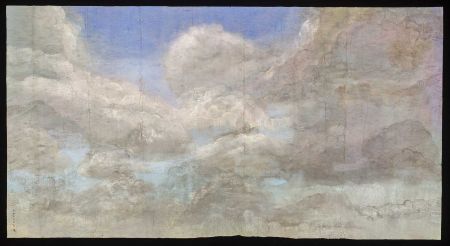
Cloud Feedback
2022
Cochineal, dyes, oxides on barkcloth
32 X 55.50 inches Framed
Inventory ID: # 16816
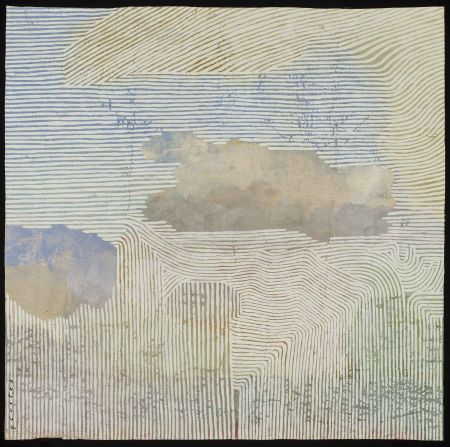
Made fire, will pray for rain, II
2022
Cochineal, dyes, oxides on barkcloth
28 X 28 inches Framed
Inventory ID: # 16823
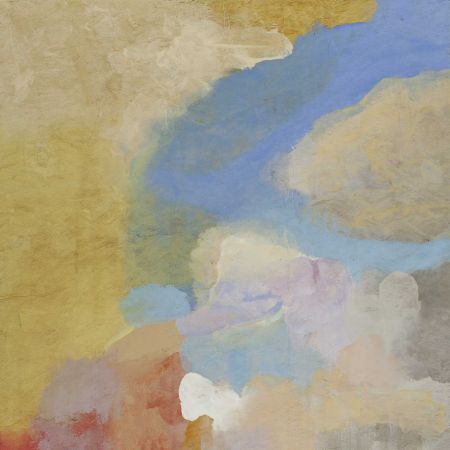
Foreseeable
2022
Cochineal, dyes, oxides on barkcloth
31 X 30.50 inches Framed
Inventory ID: # 16821
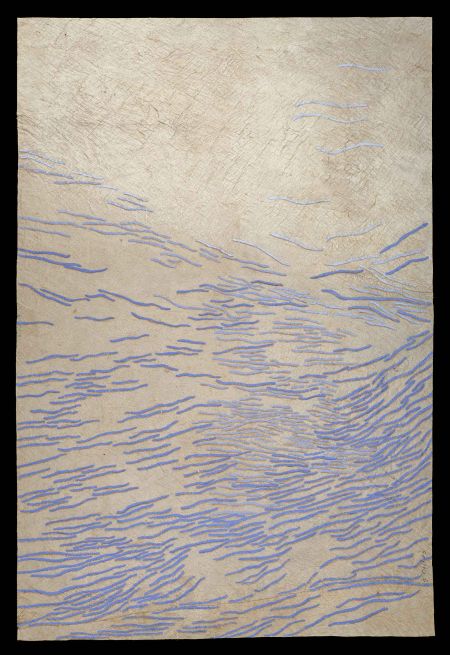
Pacem II
2021
Natural earth oxide on Yanchama
59 X 42 inches Framed
Inventory ID: # 16643
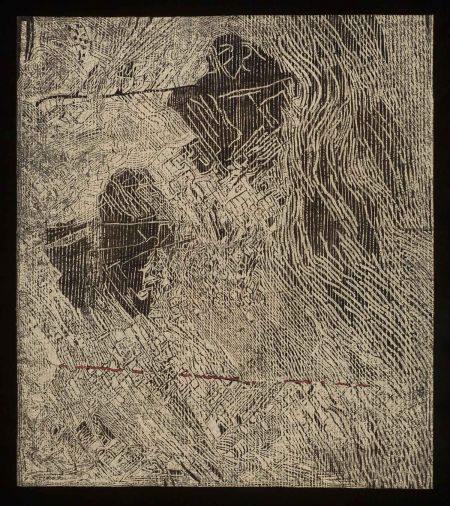
Common Ground
2021
Natural dyes w/ earth oxide on Yanchama
43 X 39 inches Framed
Inventory ID: # 16644
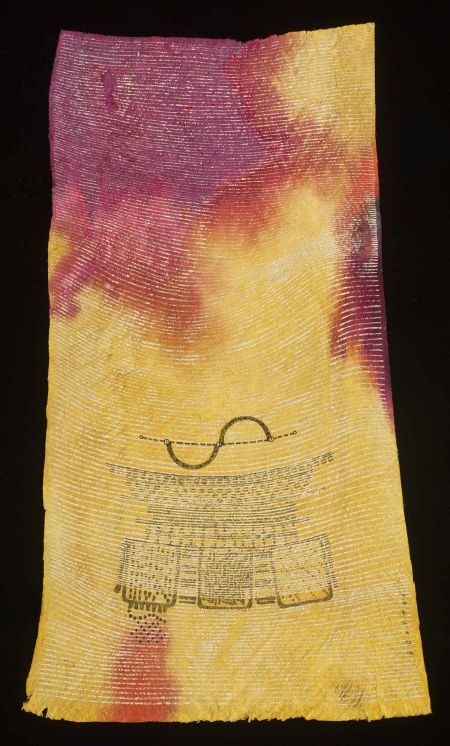
Great Old New Schism
2021
Natural dyes w/ earth oxide on Yanchama
46 X 30 inches Framed
Inventory ID: # 16646